Do the Roots of Yoga Extend to the Central Asian Turks?

Updated: May 3

Anyone who practices yoga knows this. If you mention that you practice yoga in any setting, you will most likely encounter a question or joke associating it with Hinduism, India, and Buddhism. Whenever yoga is mentioned, there is always some connection to India. The Vedas, Hindu rituals, and Buddha's universally recognized meditation posture are enough to establish that connection. Yoga is a value that is rapidly rising and spreading throughout the world. Yoga has made a significant contribution to India's recognition around the world in terms of tourism and culture. For this reason, in recent years the Indian government has begun to provide significant support for the spread of yoga worldwide.
But what is the truth of the matter? What is yoga's homeland — the soil where it was born?
Because northern India is covered with mountains and is a peninsula surrounded by the ocean on three sides, it has an important geographical advantage in terms of preserving certain cultures. Yoga knowledge has managed to survive in this geography without being lost, in one way or another. "Managed," because without any special protection, it has come down to the present day mixed within many different traditions and religious teachings, perhaps left to be forgotten. Had it not been for the famous Yoga Master Krishnamacharya, whom all yoga lovers know, it is unclear whether yoga would be in its current state in America and Europe. In the 1960s, yoga techniques that were on the verge of being forgotten in India spread to America and Europe thanks to their miraculous effects and gained general acceptance and interest. India has only recently begun to truly embrace yoga.
When you trace the yoga texts, your path leads to the Indus River valley. Around 2000 BCE, the Aryans, known as Aryan Civilization, began to settle in the Indian subcontinent. It is known that the Sanskrit language used by yoga practitioners and the Vedas, considered the primary source texts, emerged during this period through the culture, language, and traditions brought by the Aryans. So who were the Aryans? At least 5,000 years ago, these people lived as Sumerians and Hittites in Anatolia, as Etruscans in Europe, as Navajos in North America, as Altaians in the Altai, as Uyghurs in East Turkestan, as Yakut Turks in Yakutia, and as Oghuz, Turkmen, Kyrgyz, Uzbek, Azerbaijani, Tajik, and many other Turkic peoples in Central Asia. All of these peoples spoke Turkic dialects.
At this point, to emphasize a very important detail. The word "Tur," which is the root of the word "Türk" (Turk), means a high level of consciousness. It does not define a race in the sense we use today. We understand that they called themselves "Turk" because of their determination to bring human consciousness back to a high level of awareness — that is, to the level of "Tur."
Archaeological findings confirm that the first peoples settled in the Altai thousands of years ago. This was a vast region that was the cradle and homeland of the Turkic people. In Hindu mythology, these peoples from the north of India are referred to as Nagas, or "serpent people." Is it a coincidence that Yoga Master Patanjali, the author of the Yoga Sutras — considered the fundamental source for yoga — is depicted as a serpent-man in all sculptures and paintings?
The Mahabharata, an ancient Indian work, is a historical record describing the Nagas and the mysterious northern peoples.
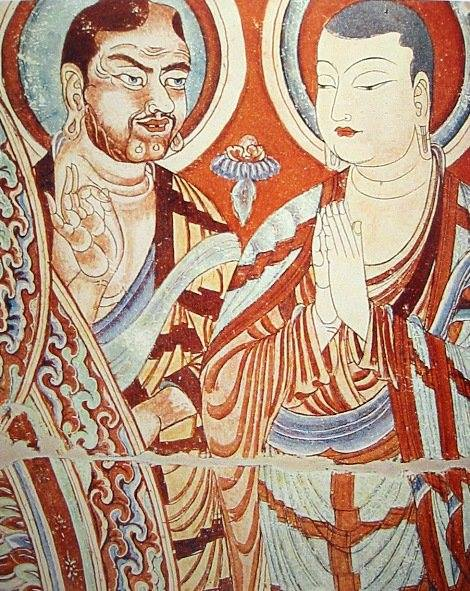
It is also known that Siddhartha Gautama has been referred to multiple times throughout history as a Naga. The fact that the Buddha's complexion was not dark like an Indian's but golden, and that his eyes were slanted and blue, confirms this reality. The Indians did not hide the truth that they received their sacred texts, the Prajnaparamita, from the Nagas — that is, from the Turks. In this way, the Indians bestowed great honor upon Turkish culture. Iranians and Indians recognized the Sakas — who were in reality a Turkic race — as "Sak." Another name for the Buddha is Shakyamuni, meaning the sage of the Shakyas (Saks).
Since these peoples did not yet call themselves Turks in those times, historian and writer Kazım Mirşan defines them as Proto-Turks. We observe that the concepts of separatist nationalism had no place in societies of that era.
Phonetic harmony is very important in Pure Turkish (Öz-Türkçe). The same rule exists in the Sanskrit language as well. Phonetic harmony in language was very important to our ancestors. It is known that they used the harmony in language together with music to connect with other dimensions and carry out healing work.
Now lets talk about the word "yoga" and some of the words, terms, and concepts frequently used in yoga. It is very much surprising to discover that the Sanskrit words known and used by yoga practitioners at a basic level are in fact derived from Pure Turkish words that exist in much older texts. We were obliged to use words existing in Sanskrit and Persian. But how unjust we have been to Turkic language. The time has long come to bring our Pure Turkish sources — which possess wisdom of incredible depth — out from dusty shelves and into the light of day.
What a great deficiency it has been to never have understood or known the Altı Yarıq Tigin and the Oghuz Khan Epic until now. They have been patiently waiting to be understood for thousands of years. Such depth ,how much of it we can grasp today, bowing with respect before the wisdom of our ancestors. After all the researches and readings I have gained until now, seeing that in Pure Turkic language, thousands of years ago, reality was described so clearly and plainly — yet with simplicity — created an indescribable excitement and a sense of shame within me. This knowledge is of such a high level that it contains advanced knowledge in an incredible range of fields: geometry, mathematics, astronomy, philosophy, anatomy, physics, cosmology, and much more. And to fully comprehend it is nearly impossible.
I am deeply grateful to many valuable historians, researchers, and writers who have made incredible efforts — indeed, devoted their lives — to bringing this forgotten knowledge to light: Kazım Mirşan, Murad Adji, Kashgari Mahmud, Namık Kemal Zeybek, and Muazzez İlmiye Çığ... No amount of thanks for their efforts would be enough.
Now we will deepen the subject by discussing the word "yoga" and some of the words, terms, and concepts used in yoga.
Drawing on these valuable sources, let us take a look at the roots of some of the words and concepts used by yoga practitioners.
Naturally, let us begin with the word "yoga." Where does the word "yoga" come from?
The numeral "Bir" (One) has come down from Pure Turkish to the present day as a word meaning the first number, a single unit, the one and only. The word "Bir" is also used to define the Absolute Being. It also defines the inner dimension of our energy body. Since the inner dimension is seen as empty from a physical standpoint, it also means "emptiness" in Pure Turkish. Because time, space, and matter are drawn inward and disappear in the inner dimension, "Bir" also means vacuum. "Bir" defines the unity of the visible and invisible universes. Another definition is that the source of "Bir" is "Yoq" (in modern Turkish, "Yok" — meaning "nonexistent"). Yoq encompasses Bir, and Bir encompasses all of creation. The word "yoga" is connected to this word "Yoq." It is also the equivalent of the word "Fena" in Sufism. Everything begins from Yoq and returns to Yoq. As Ibn Arabi said, "It is the movement of love that brings the universe into existence."
In Pure Turkish, the dimension of Yoq is also called the Tao-Dao (DAĞ/Mountain) dimension. It always exists. It is the dimension in which the essence continues to exist.
Yoq is the state of eternal becoming prior to Existence. Our ancestors, in Pure Turkish, called the transformation of matter into energy — when matter and antimatter combine (when an electron and an anti-electron attract each other and both convert into energy) — "becoming Yoq." Here there is a conversion into physical energy, or what they called "süzüg" (subtle) power. Our ancestors called those who attained the maturity of Yoq — those who extinguished their outer selves — Yogi or Suusi (Sufi).
Upon learning all of this, I believe it becomes clearer where the word "yoga" comes from. For years, every book and seminar stated that the word "yoga" is a Sanskrit word derived from the root "Yuj" — but perhaps this is a much larger and different opening.
Yogi in Pure Turkish means: the one who sees, the observer.
Mandala is the geometric, circular-form object of concentration that yoga practitioners know well. The word "mandala" is connected to the concept of "mandalak," which is widespread in Asia. Mandalak is regarded as a sacred circle in Vedism and Buddhism. In yoga, mandala is used to keep attention fixed in one place during concentration practices. It shares the same root as the word "mandal" used today, meaning "to fix attention in one place."
The Pure Turkish equivalent of the word Prana is "Bra-Anna" (Anna: essence, mother). (Bra means "Pre" in English, and "ön" — meaning "front/prior" — in modern Turkish.) Bra-Anna means the unfolding that comes from before consciousness. Consciousness makes its journey with Bra-anna. It is the state of universal consciousness before it makes itself known. It is the primordial (prior) state of everything that exists.
The word Akasha comes from "akış" (flow). In the Vedic tradition, akasha is generally used for the ether element. In Pure Turkish, it means the emergence of space and time from flowing energy.
Man in Pure Turkish means: the Hidden, the Soul, the Spirit, Life. It is also the source of the English word "Man."
Brahman, then, is "Bra-Man," meaning the Hidden Soul that precedes the essence, that which exists before it is known.
The word Atman appears in Pure Turkish as "Ad-Man." It means life belonging to the essence, the Name of the Essence, the one whose Name is hidden.
Karma: Our ancestors said that of the knowledge and experience accumulated over lifetimes, a portion evaporates like water turning into steam, while another portion multiplies like snow falling in thick flakes. They named what accumulates "kar-ma." It is also the root word for the verbs "kar" (to mix), "karmak" (to stir), "karıştırmak" (to blend). Those who research karma know that the law of karma, which is extraordinarily difficult to unravel and is based on countless connections, is truly, just as the word suggests, "karmakarışık" — mixed up and entangled.
Dharma in Pure Turkish is "Armağ," meaning an honorary gift. It is a life mission that gives strength and power to life. It brings purpose and understanding to existence. In its literal sense, "armağ" means a reward given on account of an achievement. Our greatest reward in life is our self-design.
The word Manas in Pure Turkish means the self-attracting force, the essence with the power of attraction, secrecy. It is the root of the word "manastır" (monastery). Manas means Universal Mind.
The Pure Turkish equivalent of the word Chakra is "Çağqara." The word "Ça" is a vibrational root syllable in Pure Turkish and defines rotational movement. There are many words derived from "Ça" that describe rotation and rotating objects. The word "çark," which we also use today, means a rotating wheel or rotating body. In other words, the word "chakra" — the name for the energy centers we use so frequently in yoga — is also rooted in Turkish.
Muladhara: Mul-Ad-Ara; meaning "the doorway of the root of the self." "Mul" means root in the Uyghur dialect. "Ad" means the self, and "Ara" means opening. It means the root gateway of the self.
Svadhisthana: In Pure Turkish, this is "Suw-Ad-İstan." "Suu" and "Suw" represent Divine Love Power, as well as water and the sea. The Svadhisthana Chakra is located in the pelvic region and its element is "water." All bodily fluids are connected to this center. The suffix "-İstan" is added to denote the country of residence, as in Yakutistan and Tajikistan even today.
Manipura: "Mani-bur"; in Pure Turkish it means "the transformation of the essence, the transformation of consciousness." The Manipura Chakra is connected to the fire element. The fire element is the energy that enables transformation.
Anahata: Its Pure Turkish equivalent is "Ana-Ata" (Mother-Father). It is the chakra located at the very center of the chest. The inner dimension rests there in its own essential state. Ancient texts state that it is connected to the dimension where our ancestors reside.
Vishuddha: In Pure Turkish, this appears as "İs-ud-a." "İs-ut" means the manifestation of transcendence. In Pure Turkish, it means "the universality of the bound vibration."
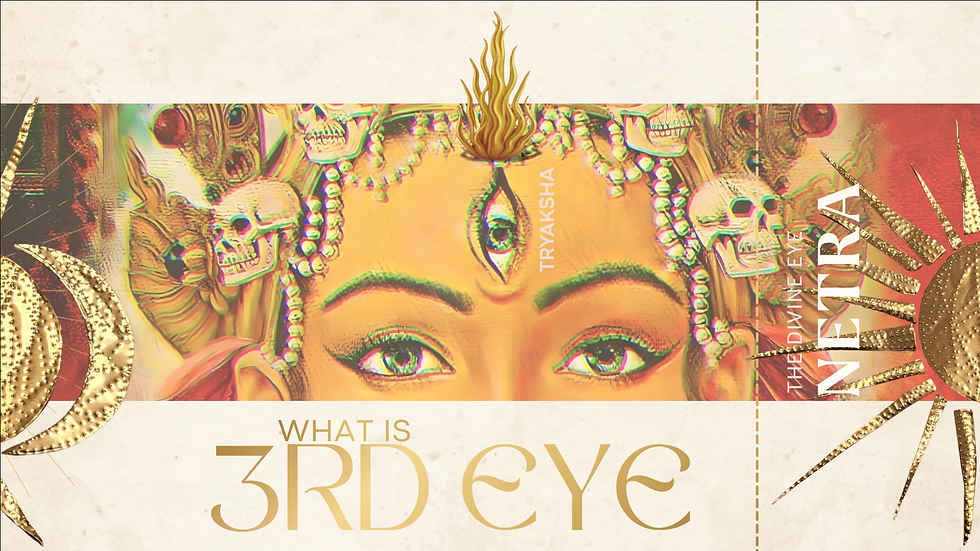
Ajna: In Pure Turkish, "Aya." Aya means the one that rotates and protects. It is the gateway opening to the channel that has existed since the beginning. In Turkish, "aya" also refers to the third eye and the palms of the hands. It means the pupil of the eye, the third eye.
Sahasrara: In Pure Turkish, this appears as "Saz-Art." It means the eternal and everlasting energy passage.
Om: This also exists in Pure Turkish. It is used to mean Soul, Vitality. It is the first sound that initiated creation. "An" is time standing still, while "Om" is time in motion.
Kök (Root): It is philosophically very meaningful that the words "Gök" (sky) and "Kök" (root) are the same in Pure Turkish. The fact that these two words are pronounced in the same way perhaps summarizes yoga philosophy.
Nadi: The word "Nadi" also exists in Pure Turkish. It is used to mean pulse and the river of life.
Tur: In Pure Turkish, it means high consciousness. It also carries the meanings of climbing, ascending, and elevation. "Tur bezi" (the Tur gland) = the pituitary gland. Its Latin name is "sella turcica," meaning the Turkish Bone, the Turkish Saddle. It means the Flow of High Consciousness.
Turki: The river of high consciousness.
Tao: The words "Dağ" (mountain) and "Dao" also exist in Pure Turkish with the meaning of that which always is and never ceases to be. It always exists. It is an extension of the love of the Absolute Being. The mountain is used as a symbol in many mythological stories.
Marmani: The Marma points in our body — of which 107 are recorded in the Susruta Samhita — are used in Qi-Gong and healing work as acupressure points where important energy currents converge. The word "Marma" lives on today in Anatolia in the names "Marmara" and "Marmaris." The word "marma" means the point where two great and powerful forces — like seas — converge. The Marmara Sea is where the Aegean and Black Sea meet, and Marmaris is where the Aegean and Mediterranean meet. "Marma" is a Pure Turkish word.
Dosha: In Pure Turkish, this derives from "Toşya." We can briefly describe it as body types based on qualities. It also means fault or defect. Dosha is a word widely used in yoga and Ayurveda.
I also wanted to specifically include the word Araba (carriage/cart). The story told in the Bhagavad Gita — considered a sacred book in India — takes place in a horse-drawn carriage. A metaphor that has remained alive for centuries is that of the horse-drawn carriage and its driver. The horse represents the acquired mind and the self, the carriage represents the body, and the driver represents the essence. The meanings of words in Pure Turkish explain all of this. The word used for "araba" in Pure Turkish is "ara-bağ," meaning "that which connects two sides to each other."
Guna: The word "Gun" or "Kun" is synonymous with the Pure Turkish term "yınnaq." It also means quality. The rays of the Invisible Sun are "Gun." It means the power and quality that brings forth the "süzüg" (subtle) energies.
Very surprised to learn that the triangles, quadrangles, hexagons, and octagons in the patterns of our Turkish rugs and kilims symbolize these opposing qualities. And these are how similar the patterns we use as mandalas in yoga are to the patterns of the old rugs in our homes that we examine in every detail
[Anatolian rug and kilim patterns] I will share more about it in another blog
The world's oldest calendar that describes these opposing qualities is the twelve-animal Turkish calendar. The twelve animals and twelve planets are connected to these qualities. When you research these twelve animals, which we know from Chinese astrology, you will inevitably find that it leads you back to the twelve-animal calendar used by the Central Asian Turks.
Çi (Qi): "Çiü" passed into Chinese as "Çi." It defines life energy.
Tapas: "Tapaş" is the most active power of the fire element. It dissolves karma. It is activated by the person's genuine desire to truly know themselves.
Band: In Pure Turkish, it means "bağ" (bond/tie).
Agu: "Agu" is also Pure Turkish. It means the fire of digestion. In Sanskrit, it is "Agni."
Budda: In Pure Turkish, it means one who is purified from ignorance.
Ni-irwan: It means returning to the essence.
Nirvana: It carries the meanings of liberation and birth.
These terms were used thousands of years before the Buddha by the ancient Central Asian peoples for spiritual and scientific explanations. The Altı Yarıq Tigin texts are the most vivid example of this.
As can be seen from all the word examples and concepts above, the roots of nearly all the words we know and use as Sanskrit extend back to before 1700 BCE — all the way to the peoples who lived in Central Asia. Linguistics holds a very important place in correctly understanding historical truths. It is necessary to correctly understand and convey the symbolic expressions used in ages past.
In light of everything written here, we can see that yoga has a much older history than we imagined, one that extends to Central Asia. In the light of these historical facts, it is evident that the knowledge of yoga has sources far older than Hinduism and Buddhism.
Yoga is not a religion. It is a path to healthy living and to perceiving our own true nature. The aim of yoga is to be in harmony with nature. It is not a form of worship, but it has played a supportive role for religions. Because when people are within this discipline and in harmony and peace with nature and with themselves, they can also perform the acts of worship within their own religions with greater sincerity. Researching and knowing the roots of yoga philosophy will help us to better understand our ancestors, the roots of all philosophies, and our true potential.
Yoga is an ancient discipline that people of all ages can practice regardless of their health condition, with countless physical and mental benefits. In our country, unfortunately, due to various prejudices and misinformation, it is not where it should be. We must now remember this valuable knowledge, whose roots extend to our ancestors, and support it being introduced in this way both in our country and throughout the world.
Altı Yarıq Tigin: These are written texts estimated to date back 16,000 years, meaning "The Virtue of Six Currents" or "Six Streams of Light." These texts were first carved on stones and later put into written form. Ancient Turkish inscriptions dating back 5,000 years found in Gozel, France, convey the same message. After 516 BCE, due to political pressures, the texts were copied onto paper and preserved in the Miran Fortress in East Turkestan. In 1907, Aurel Stein, a Hungarian Turkologist, found these papers, and in the 1970s, Kazım Mirşan succeeded in reading these ancient writings. The same texts were translated in the 8th century by the Chinese scholar Lü Tung and became the backbone of Taoism. The six virtues are similar to the Tibetan Wheel and explain the wheel in depth.
Oghuz Khan Epic: The Oğ-uz Khan Epic describes the emergence of self-design, the layers of the human energy body, and the transformation of consciousness into matter. It is useful to examine the philosophical portion separately from the narrative portion.
It is known that yoga is largely based on Samkhya philosophy. Samkhya advocates a dualism of matter and consciousness, and regards the mind as a more subtle form of matter. Those who know the Oghuz Khan Epic and the Oghuz Creation Myth — known to date back to well before 3000 BCE — can easily see that Samkhya philosophy may have been based on knowledge described in a section of this epic. "Og-uz" means one who undergoes transformation, one who is capable of attaining awareness. Here, what undergoes transformation is "consciousness." Just as in the Bhagavad Gita, this profound philosophical knowledge may have been hidden within an epic so that it would not be forgotten among the people and would spread more easily.
In the epic, Oghuz Khan has six sons, and from each son four grandchildren — 24 grandchildren in total. The names of the characters in the epic carry deep meaning. The word "oğlan" (boy) also means one who adapts. These grandchildren correspond in a way that cannot be called coincidental to the gunas, elements, and qualities we know from yoga philosophy and Ayurveda.

Serpent worship occupies a significant place in the religious landscape associated with the era of Kanishka I of the Kushan Empire(Kushans are basically Turkic). A notable artifact reflecting this cultural and religious symbolism is the so-called Kanishka casket, discovered near Peshawar Pakistan. The photograph often circulated (credited to PHGCOM, 2005, Wikimedia GNU) likely depicts the replica housed at the British Museum, while the original is preserved in the Peshawar Museum.
Within this broader historical context, serpent (Nāga) symbolism was deeply embedded in the spiritual traditions of the region. In the text Mahavamsa (“The Great Chronicle of Lanka,” spanning roughly from the 6th century BCE to the 4th century CE), translated from Pali by Wilhelm Geiger, it is described that the inhabitants of Kashmir and Gandhara venerated Nāga kings—serpent deities believed to dwell in magnificent, otherworldly palaces beneath the waters. These beings were regarded not merely as mythological creatures, but as powerful guardians and semi-divine rulers associated with fertility, protection, and esoteric knowledge. Their prominence is also linked to the religious transformations of the period, including the rise of Mahāyāna Buddhism.
The term “Nāga” itself derives from Sanskrit, where it directly denotes a serpent, but its symbolic meaning extends far beyond a literal interpretation. Nāgas function as liminal beings—bridging terrestrial, aquatic, and subterranean realms—and frequently appear in both Hindu and Buddhist traditions as protectors of sacred teachings.

Bulca Qan (Mongol) is the ancestor of the Tubut/Tibetans.
A statue made of meteorite, dating back 1000 years, with the Oz symbol on its chest.
Stolen from Tibet by the Nazis in 1938, the statue was taken to Germany.
Chemical analysis by scientists at Stuttgart University revealed that the statue is made of meteorite iron that fell 15,000 years ago and is 24 cm (9.5 inches) tall.
Bulca Han Family Tree and Oğuz Kağan Connection
According to mythological genealogy, Bulca Han is the great-grandfather of Oğuz Kağan, the greatest hero of the Turkic world.
Bulca Han: The oldest common ancestor of the Turks and Mongols.
Mughal (Mongol) Han: The son of Bulca Han. In some narratives, he is considered the ancestor of the Mongols.
Kara Han: The son of Mughal Han and the father of Oğuz Kağan.
Oğuz Kağan (Oğuz Han): The son of Kara Han. He is the most central figure in Turkic mythology, and it is believed that the 24 Oğuz tribes descended from him.
The Turkic homeland of Tubut (Tibet) has been largely occupied by India and China.
Information about the authors of the works used as sources:
Kashgari Mahmud: A linguist who lived in Central Asia in the 11th century and wrote "Divanü Lugati't-Türk," a dictionary of Turkic dialects. In his time, just as we today use English in our writings, most Turkish scholars wrote their works in Arabic. This scholar, deeply saddened that Turkish scientists of his century were using Arabic and Persian in their works, argued that Turkish contained a science and philosophy not found in either of those languages, and that it would be very beneficial for the scientists of his era to use Turkish. He traveled Central Asia on horseback and, through years of labor, compiled this dictionary. He completed his work in 1074 and took it to Baghdad. The dictionary was lost until the early 20th century, when it surfaced in Istanbul. Since then, the work's value has grown with each passing year and continues to inspire admiration.
Murad Adji: A historian and writer who has written numerous books on the history and culture of the Turkic world and the Great Steppe, Murad Adji is one of the finest researchers on Turkish history and culture and the enormous influence Turks have had on world history.
Kazım Mirşan: An engineer who has pursued the Turkish language and history as his personal area of research. He can speak all Turkic dialects, Chinese, and many European languages. He is able to read Egyptian hieroglyphs and many ancient inscriptions and stone tablets from around the world. He has written more than fifty books on these subjects in various languages. He currently lives in Bodrum.
Comments