KÜN-AY : COSMIC SYMBOLISM.Central Asian proto-Turkic tradition symbol till today.

Core Symbolism
The Kün–Ay (Sun–Moon) motif is one of the most enduring symbols in Turkic cosmology and political ideology. It represents:
Sun (Kün) → light, life, creative power, and divine justice
Moon (Ay) → order, continuity, cyclical renewal, and harmony
Together, they express a cosmic duality:creation + continuity, light + rhythm, power + order
This dual structure reflects a broader Turkic worldview in which the universe is governed by sacred balance (töre) and divine order (kut).
Political and Sacred Function
The Kün–Ay was not merely decorative—it had state and ritual significance:
Turkic Khagans and Alp warriors wore sun–moon diadems
These crowns symbolized receiving “Kut” (divine legitimacy) from the heavens
The ruler was seen as:
Protector of the people
Representative of cosmic order on earth
Additional elements:
Wing motifs → associated with Alp warriors (mobility, mastery, celestial connection)
Bird symbolism → spiritual elevation and divine mediation
Coins from the Huns and Göktürks (6th–9th c.) depict rulers with these symbols, confirming their political authority and sacred association.

The AY KÜN iconography, which the Turkish Khagans and Alps have carried on their heads for thousands of years, continues to symbolize the unity and power of the Turkish nation!
The Ay- KÜN iconography represents the light of the Sun and the order and continuity of the Moon. These symbols are one of the cornerstones of the Turkish state understanding and cosmological worldview.
Details in the visual:
• The crescent-star figure is a strong part of modern Turkish symbolism from the past to the present.
The coins prove that the KÜN-AY motif has been used in different Turkish states throughout history.
The deep roots of Turkish culture and the meaning this symbol has carried for thousands of years.
The KÜN-AY iconography does not only symbolize the sun and the moon in Turkish culture; it also represents the creative power and the sacred order created by Him.
•The Sun (Kün) is the symbol of light, life and creative power in Turkish mythology. The Sun represents both the light that God has bestowed on the world and the light of divine justice.
•The Moon is the source of peace and order that illuminates the night. It also points to the continuity of creation as an indicator of change and cycles.
This icon was carried on the heads of the khans as a reflection of God's order on earth. Among the Turks, rulers are seen as the protectors of the people and representatives of the divine order. Therefore, this symbol reminds us that the power of the rulers is based on a sacred origin.
The KÜN-AY iconography is not only an aesthetic symbol, but also a symbol that reflects the creative power and the sacred understanding of the Turkish nation.
THE COSMIC ORIGIN OF THE AY - KÜN SYMBOL.
The origin of the Turkish flag is the Kün-Ay tamga and its first forms are found in KHAKASISYA and GÖBEKLİTEPE. The origin of the Turkish flag dates back to 17 thousand BC, much older than what is known as time.

According to the generally accepted view; the Turkish flag took its color from the blood of martyrs and its inspiration from the moon and star reflected in this pool of blood. Although this information about our flag is emotional and true, it is not enough to explain its historical development or origin.
The Turks have been using the crescent-star symbol since ancient times. However, there is another symbol that we have used much earlier and continuously than the crescent-star symbol; Kün-Ay. In other words, Sun-Moon.
The Turks used the Kün-Ay symbol long before they used the crescent-star symbol. The Kün-Ay symbol consists of the Sun and the crescent Moon. There is often a dot or circle in the middle of the Sun symbol. This detail is very important. Because this dot or circle shows that light prevails over darkness, that the sun's illuminating power prevails over darkness. The Turks call this the Yaruk race; in other words, the symbol of light. When considered together, the Kün-Ay symbol actually represents the first day of spring. It symbolizes resurrection, rebirth, the day the earth awakens, in other words, the spring equinox*.
We see the oldest form of the Kün-Ay symbol in Khakassia rock paintings. This Kün-Ay tamga, which is thought to be one of the oldest observatories in the world, consisting of natural rock structures and discovered in a place called Sunduki, dates back to 17 thousand BC.
We come across the same Kün-Ay symbol in Khakassia, thousands of years later, in the Göbeklitepe temples in Anatolia.
These two symbols, which are exactly the same, also lead us to assume that there is a connection between the two geographies, a cultural bridge. The Kün-Ay tamga in Göbeklitepe is also the oldest Kün-Ay tamga in Anatolia. The Kün-Ay symbol was also used in the flags of the Chu Turks in the first millennium BC. Today, the Kün-Ay symbol is still present on the flag of Mongolia.
The Kün-Ay symbol, which also symbolizes the spring equinox* and therefore the Great Kün festival of the Turks, later transformed into the crescent-star form, especially during the Sumerian period. The crescent-star also became the symbol of rebirth and agriculture for the Sumerians. After the Sumerians, the Hittites, Etruscans, Romans and Greeks also used the crescent-star symbol. In all of these cultures, the crescent-star symbol has been the symbol of rebirth.
The origin of the Turkish flag is the Kün-Ay tamga and its first forms are found in HAKASYA and GÖBEKLİTEPE. The origin of the Turkish flag dates back to 17 thousand BC, much older than what is known as time.
The real meaning of the Turkish flag is; Rebirth or Resurrection, Spring Equinox, ULU KÜN, The Victory of Light Over Darkness!
KÜN AY
Diadem-Crowns used by Western Gokturk (KÖK TÜRK) Khagan Alps and Beys. 6-7th centuries.
Kün Ay and bird wing iconography on the right and left were used. Turkish Khagans would receive blessings from the Sun and Moon when ascending to the throne. Gün-Ay was the highest degree of brightness symbol.
Turkish Alps would wear "Bird Wings" on the right and left of their heads when going to war. According to Kashgari, it was the emblem of Alps who could shoot arrows back and forth on horseback in Turks.
Göktürks are the first state to use the name Turk.
Gokturk State was founded by Bumin Kagan in 552. It is the second largest Turkish state established in Central Asia after the Asian Hun State.
Turks' KÜN-AY iconography and Double Wing Symbol.
When the Gokturk Khagans ascend to the throne, they receive "Kut" from the Sun and the Moon. In Turkish cosmological thought, the Sun and the Moon are the highest degree of brightness symbol.
On the coins belonging to the Huns and Gokturks, the heads of the Khagans and Beys are seen with kun-ay and winged diadems.
7-9th century Golden diadems used by the Hun and Gokturk Khagans and Alps.
The Hittite Kün-Ay stamp whose image been obtained from the Museum of Anatolian Civilizations.


The Crescent–Sun (AY–KÜN) Tamga on the Turkic-Hun Coin and the Crescent–Sun Tamga of Göbeklitepe.Our Turk ancestors used this symbol to express the beginning of the year—the period of spring and the equinox. To describe this moment, they would say: “The Moon and the Sun have met.”

There is often a reluctance in Western scholarship to directly associate ancient findings with Turkic identity.
At Göbekli Tepe, certain circular and crescent forms strongly resemble the “Kün–Ay” (Sun–Moon) tamga, a symbol that holds an important place in Turkic cosmology. These shapes suggest a possible symbolic continuity that invites deeper comparative study.
The presence of vulture and other animal figures also parallels the spiritual animal symbolism found in Shamanic traditions and the Tengri belief system, where animals serve as mediators between worlds.
Additionally, some of the abstract markings bear resemblance to tamgas associated with concepts such as “Uç” (sovereign/divine authority) or “At” (horse)—both central motifs in steppe culture.
While such interpretations remain open to debate, the visual and symbolic similarities point toward a broader cultural and cosmological framework that may connect prehistoric Anatolia with later Central Asian traditions.


The Moon has descended to the earth. The Kagan and the Lady (king and queen) are depicted; behind the Lady stands the state bird. A goat is present, and below, a leopard, dog, or lion—symbolizing the people.
This appears to be a seal illustrating the Buğ ceremony, in which the Kagan and the Lady receive a blessing. It is thought to belong to the Hittite or Hatti cultural sphere (Erdinç Bakla archive).
The figure seated on the goat—interpreted as the Kagan—holds an oath goblet in his hand. The scene, in essence, represents the Buğ ceremony as a ritual of oath-taking and sovereign consecration.

Sun (Kün/Gün) – Moon (Ay): Echoes from Noin-Ula to the Hungarian Plain
The ancient symbols of the Sun (Kün) and Moon (Ay) are not merely decorative motifs—they are carriers of memory, cosmology, and identity stretching across Central Asia into Europe.
Findings from the Noin-Ula kurgans, associated with the Huns, open a window into a world where symbolism, language, and ritual were deeply intertwined. Scholars across China and beyond have long examined the language of the Huns. A prevailing view places it within the Altaic sphere, with strong indications of early Turkic structure. Even Zhang Qian, during his captivity among the Huns, recorded linguistic elements that align closely with Turkic forms.
Historical sources such as The History of the Wei Dynasty note that the Chile people—ancestors of the Uyghurs and Yugurs—spoke a language nearly identical to that of the Huns. This continuity reinforces the argument: the Hunnic tongue was fundamentally Turkic.
But language is only one layer.
Music, perhaps more than language, preserves the emotional DNA of a people. Hungarian composers Béla Bartók and Zoltán Kodály discovered striking similarities between Hungarian folk songs and those of Turkic groups from Central Asia and the Volga region. Melodic structures, rhythmic patterns, even vocal textures—these were not coincidences.
Bartók’s 1936 fieldwork in Anatolia revealed that nearly 40% of the collected Turkish folk songs bore clear relationships to Hungarian music. This points toward a shared cultural reservoir—one shaped by migration, contact, and memory.
History supports this flow.
Following ecological collapse and conflict around 91 AD, the northern Huns migrated westward, eventually reaching the Carpathian Basin by 374 AD. Though their empire dissolved after Attila’s death, their cultural imprint endured. Later arrivals, such as the Avars, and the eventual migration of the Magyars in 896 AD, layered additional influences into the region.
The Magyars themselves, though Finno-Ugric in linguistic origin, spent centuries among Turkic peoples. This is reflected not only in music but also in vocabulary—especially in pastoral terminology, where many Hungarian words trace back to Turkic roots.
Even groups like the Mari, though ethnically Finno-Ugric, exhibit strong Turkic musical influence due to centuries of contact.
What emerges is not a simple lineage, but a woven tapestry.
The Sun and Moon—Kün and Ay—stand as enduring archetypes within this continuum. They symbolize not only cosmic balance, but also the meeting of cultures, migrations, and identities across time.
From the steppes of Central Asia to the plains of Hungary, their light still carries the memory of a shared origin.

Comparative Musicology
Du Yaxiong (1985) – Comparative Research of Chinese Folk Songs and Hungarian Folk Songs
Professor, Faculty of Ethnic Minorities, Academy of Music, Beijing, China.
Highlights similarities between Hungarian folk songs and Turkic-influenced Chinese folk songs.
Suggests that migration and cultural contact—particularly of the Huns—shaped Hungarian musical heritage.
Notes on Modern Turks and Historical Lineage
Modern Turkish people are descendants of Oghuz Turks, who include:
Seljuks, Anatolian Principalities, and later Ottoman (Atman/Osman) dynasty.
Oghuz Turks trace their ancestry back to Göktürks, Huns, and Scythians (Sacae).
Mixing with other groups (Greeks, Arabs, Armenians) was mutual and historically layered.
Many of these groups may themselves have Turkic origins through Scythians, Parthians, Trojans, or Pelasgians.
Important clarification: “Turkic” as a language-family term is sometimes used incorrectly; historically, these people were Turks.
Archaeological and Linguistic Evidence
Noin-Ula Kurgan: Linked to Hun culture and broadly to early Turkish cultural heritage.
Etruscan Inscription on Zagreb Mummy: KIZ-XIS-CIS interpreted as “girl,” showing links between ancient inscriptions and later Turkic language forms.
On Turkish script history:
Claims that the Turkish alphabet emerged in the 5th century are plausible but must be evaluated critically.
Prof. Dr. Ahmet Taşagil: “Until the 13th century, we cannot fully distinguish between Mongolian and Turkish language in the sources.”
Statements about making 5,000-year judgments about a people’s language based on a 6th-century document are misleading.
Groups and Historical Turks
Avar Turks – Early medieval Turks who settled in Central and Eastern Europe.
Mani Turks – Likely refers to historically documented Turkic or Central Asian communities under the name “Mani,” possibly linked to Manichaean regions or traditions.
THAT IS WHERE BRAH MANI SM COMES:!

Please have a look into this link
EARLY TÜRKS: ESSAYS on HISTORY and IDEOLOGY:
The Enisei Inscriptions and the Sun-Moon (Kün-Ay) Motif in Eastern Manichaeism of Turkic Origins.
Rich material for understanding the cultural and religious milieu of the early Turks comes from inscriptions along the left bank of the Enisei River, near its confluence with the Elegest River (notably inscription E 10) [Kormushin, 1997, pp. 228–242].
The memoriant (the person commemorated) of E 10 lived in the Körtle-khan (Körtle-qan) state.
The Khan awarded him a shoulder and a belt with a scarlet stripe (line 5), a symbol of honor and authority.
A second inscription from the Elegest region (E 52) identifies another memoriant named Körtle-sangun [Kormushin, 1997, pp. 174, 177].
The combination körtle-khanym, meaning “my Körtle-khan,” is also attested in a fragment of a Manichaean text from Turfan [Zieme, 1975, p. 81].
Linguistically, körtle means “beautiful” or “gorgeous,” and can also function as a substantive meaning “beauty.”
Beauty and Light in Eastern Manichaeism
In Manichaean doctrine, beauty is not merely aesthetic—it is tied to the divine Light:
True beauty belongs only to the creations of Light.
Material beauty exists but is imperfect and transient, like the mortal beauty of Adam and Eve, which only imitates the divine beauty of the Third Messenger of Light.
Animals, plants, and humans contain a living Soul, connecting them to the divine Light [Gershevich, 1980; Litvinsky & Smagina, 1992; Smagina, 1998].
The Five Oglan-Elements of the Primogenitor
Manichaean texts describe five divine forces or “oglan-elements” sent by the Primogenitor to battle the forces of Darkness:
God of Zephyr (Tyntura Tängri)
God of Wind (Yil Tängri)
God of Light (Yaruq Tängri)
God of Water (Suv Tängri)
God of Fire (Ot Tängri)
These elements represent five sons, five soldiers, and five weapons, each embodying Light.
They fight against Smoke, Storm, Darkness, Poison, and Inferno, the manifestations of Darkness.
Their interaction forms a zone of Mixture, a chaotic space where Light and Darkness intermix.
This chaotic mixture becomes the foundation for the cosmic world, created by demiurge deities of the Belt. Here, the gods of the Sun and Moon reside alongside a judge of human souls.
And...what about
Tibetan Turkish Kağan Gesar

The epic of Kağan Gesar is performed by Tibetan bards who wear special attire and headdresses reserved exclusively for this purpose. On their headdresses, the Sun-Moon (Kün-Ay) iconography, used historically by Turks and Mongols, is prominently displayed. Flanking the central figure are the symbols of bow and arrow, representing Gesar himself.
Gesar, of Tibetan Turkish origin, is also known as Abay Geser or Gezer Han. His epic is the most important in Tibetan culture and has been recognized by UNESCO as an Intangible Cultural Heritage.
The epic exists in multiple variants and is considered the longest epic in the world. Chinese collections based solely on Tibetan versions amount to 120 volumes, containing over a million verses, divided into 29 sections. Tibetan bards recite the epic from memory.
Various versions of the Gesar epic are known among the Hunza, Kalmyk, Ladakhi, Bhutanese, Nepalese, Tibet-Burmese, Turkish, and Tungus peoples, demonstrating its broad cultural influence across Central and East Asia.
Tibetan Turkic Khagan Gesar
Though you cant see in wikipedia as Turk ! He is considered one of the Turkic Shahi Tigin Khagans, and his portrait appears on coins minted in his name. His warrior and combative nature, along with his success in defeating the army, is thought to form the historical core behind the Tibetan Epic of Gesar.


He is also known as Abay Geser and Gezer Khan. The epic is the most important in Tibetan culture and has been recognized by UNESCO as an Intangible Cultural Heritage.
Various versions are known among the Hunza, Kalmyk, Ladakhi peoples, Bhutan, Nepal, Tibet-Burma regions, as well as Turkic and Tungusic tribes.
Stories from the Gesar cycle are also known within the territories of the Uyghur Khaganate.
The photograph is from Tibet known as Gesar. He appears with a posture characteristic of Turkic Khagans, holding a goblet in his hand—an iconographic stance associated with the Turkic “Alp” (heroic ruler) tradition.
And what about if I told You ..
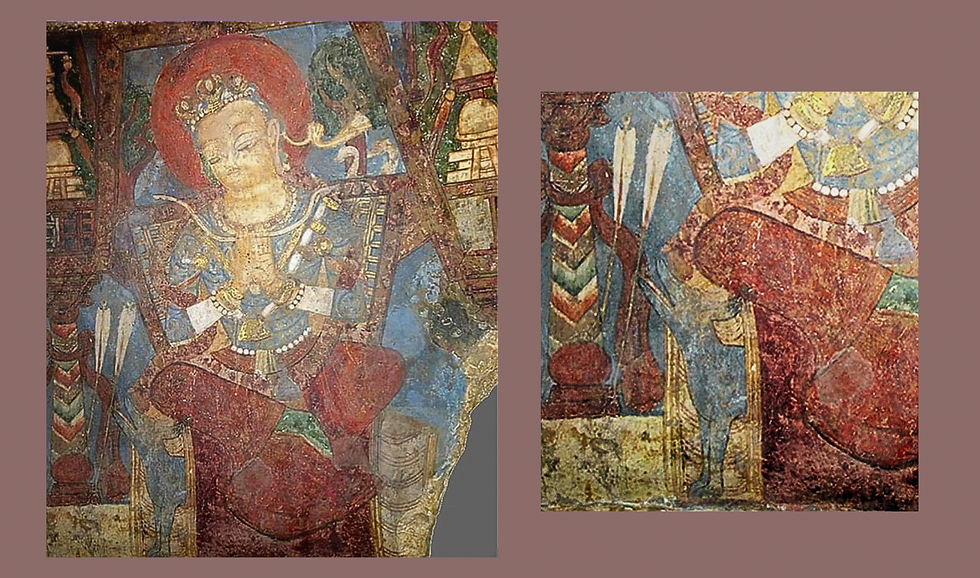
Determinations on Buddha’s Turkishness and the Birth of Turkish Architecture
Overcome anger with calmness
Overcome evil with goodness
Overcome poverty with generosity
Overcome lies with truth
Three things cannot remain hidden for long:
the Sun (Kün), the Moon, and the Truth.
Sakya Turk (Gotama) Kutlu — the Wise Buddha
It is considered significant that Buddha used the expressions Sun and Moon (Kün–Ay) in his teachings, similar to their appearance in the Yenisey and Old Turkic inscriptions.
In statues of Saka Turk Gotama (Kutlu) Buddha, who is believed to have lived between 563–483 BC, particularly those from the Himalayas and Kandahar (2nd–3rd century AD), Buddha is depicted with a moustache, resembling the White Hun Turkic type.
(In these depictions: Turkish symbols are said to appear—Gök Börü (Sky Wolf) and arrow motifs on his throne, Kün–Ay (Crescent–Star) on his head, and a Double Wolf-Dragon symbol on his neck.)
In sculpture, the Wise Buddha is often shown seated cross-legged in a posture associated with ancient Turks, with the Gök Wheel (Sky Wheel) symbol on his chest. This sitting style is considered to have passed from the Turks to Buddhism, and from there into Yoga traditions.
The expressions Sakya and Gotama (interpreted as Turkish: Saka–Kut) are mentioned in Pali and Indian Buddhist texts. In the Vinaya Sutra, it is written that the Wise Buddha, pointing to a child building a mound of earth, foretold that in the future Kaṇiṣka (Kanishka)—also identified as Erke Khan, the Kushan ruler of Saka Turkic origin—would build a mound (interpreted as Kurgan / Turkish temple) in his own name.
Influenced by these teachings, the Kushans constructed numerous religious structures across India, calling them “Tope” (interpreted as Turkish: “Tepe,” meaning hill). The use of such terminology is presented as an indication that Buddha used Turkish words.
The Scottish architectural historian James Fergusson (1808–1886), in his work History of Indian and Eastern Architecture, argued that:
The Aryans were a Turanian (Turkish) tribe who migrated from the north into India around 3100 BC.
Later migrations included Scythian/Saka Turks, Kushans, and Hephthalite Turks.
The earliest architectural works in Asia were created by these Turanian (Turkish) peoples and later transmitted westward.
Sakyamuni Buddha was Turanian.
During the reign of Kanishka (Erke Khan), architectural structures called Tope (Tepe) were constructed, with over 84,000 such monuments across Asia.
When these structures are examined, it is argued that:
They reflect the Turkic kurgan (burial mound) tradition and yurt-based architectural forms.
Domed structures seen today—such as mosques, masjids, tombs, inns, and octagonal mausoleums—derive from this earlier tent-dome (yurt) architectural model.
Accordingly, many major architectural traditions—including those of the Seljuks, Karakhanids, Ghaznavids, Ottomans, Mughals, Mongol (Genghis and Kublai), Timurids, and Safavids—are presented as continuations of earlier Scythian/Saka Turkic architecture.
In this perspective, modern Turkish architecture is seen as having originated and developed from the architectural legacy of the Kushan Turkish Khaganate, itself a branch of the Scythian/Saka Turkic world.

Kün–Ay (Sun–Moon) in Proto-Turkic Cosmology
Kün-Ay (Sun–Moon) in Proto-Turkic: KÜN (Sun) and EKİ / EYKİ (Moon, its complement) descended from the sky to the earth in order to consecrate BUĞ. They are located in the lower right part of the image (in the form of two human figures with hair). They will give BUĞ (bey) the title of BU’luk (han).
A person who has such a title must serve their people like a servant. This obligation is:
a DUTY,
an AUTHORITY, and at the same time
SACRED.
For this reason, the title is given only through a CONSECRATION (TAKDIS) ceremony.
If observed carefully, there are two Suns and two Moons… One pair is above in the SKY, the other pair has descended to the EARTH, among people, at the top side.
In the Qur’an, there is an expression: “Lord of the two Easts and the two Wests”, which reminds us of the existence of Sun and Moon both in the sky and on the earth.
The granting of authority to BUĞ is possible through the THREE QUALITIES of KÜN. This is shown by the three dotted circles on the head of the KÜN in the sky. It also connects with three animals… This is done through two arms and one leg… again THREE!
The word “three” indicates both the highest level and the number 3 itself.
The Moon Deity (Ay Tenrisi) next to the Sun in the sky has the quality of EKİ (two). This is seen in the striped circle and dotted circle around its head. Also, there are two animals, each with one arm and one leg, making two arms and two legs in total.
If one reflects, it is not possible to explain as coincidence that in the two figures (duality) at the upper part of the rock image, one consistently represents three, and the other consistently represents two.
The Central Asian human who created this rock art 10,000 years ago expressed something symbolically.
Continuing…
In the left hand of the Moon, there are two fingers, and in the right hand, one finger, indicating BU (Han – the One, the ruler). In total, it again makes three.
The animals belonging to it are the Goat (mountain goat) and the Dog. The mountain goat climbs heights and carries messages to God, while the dog is a guardian.
The animals of the Sun Deity are the Cow and the Tiger (Panther).
The symbol of its creativity is “the goat in a birth position”, and the four lines behind the goat show this. This number has evolved through stages such as Toğ-ur, Tör-et, Tört, reaching its present form.
The Toğ-ur(an) woman gives birth, and Tör-et(er), meaning she sits in the most honored corner of the home called Tör.
At this point, mentioning Sun God and Moon God might seem like a departure from the concept of a single God. However, it should be understood like the attributes of God’s Celâl (Majesty) and Cemâl (Beauty). There is no second god—these are reflections of the one God.
Just as the Moon reflects the light of the Sun, it is the mirror that shows the face (beauty) of the Sun.
The applied ritual is EZ ED A EM, meaning the CONSECRATION CEREMONY:
EZ = sanctification
ED = doing / creating
EM = posture
Together: the act of consecration.
This is understood from the seven flame-like hairs of the Sun and Moon figures at the lower right, and from their hands-on-hips posture (EM). This posture shows that life on earth is possible and connected to the sky.
In Proto-Turkic, the word “Alt” (six) means representative. It is expressed with six lines or six dots. Since the Moon conducts this ceremony on behalf of God, it is in the position of a representative.
It is seen that the Moon has six flames on its head, and one flame from the Sun completes it to seven. This carries deep meaning.
The other three figures raising one arm upward indicate that they point to the sky, receive power from the sky, and perhaps express gratitude.
For this ceremony to take place, the wife of BUĞ must also be present. A person without a partner is not considered complete.
A Bey cannot become Han without a Hatun. This shows the importance given to women in Proto-Turkic culture.
The Sun and Moon descending from the sky consecrate BUĞ with a serpent. The serpent carries the attribute BU-OĞ-A (Boğa):
BU = ruler / exalted person
OĞ = sun / sacred
A = article
Together meaning: Exalted Sun, i.e., Supreme God.
The power of God descends from the sky to the earth in a spiraling way, represented by the serpent.
The seven people holding hands like a halay dance symbolize this serpent. The serpent’s tail touching BUĞ has a special meaning.
Thus, the Bey of the Turks becomes the Supreme Han through this consecration.
The symbol of Han is 1
The symbol of being consecrated (EZ EDİ) is 7
This consecrated ruler sits on the throne with his Hatun and serves the people.
From this 10,000-year-old rock ritual, many elements survive today. We can especially recall the “hands-on-hips” motif in carpets and kilims, and the halay dance.
The posture EM is still known today as the motif “İM”.
Continuing…
On the head of the Sun are three circles. In the outermost circle there are 19 dots. These represent the spreading of divine qualities (duty, authority, sacredness) from the highest level.
The number 19 comes from compressed forms of words like OT, OĞ, EZ, ON.
The 17 dots in the second circle represent sanctification for the people.
The 11 dots in the inner circle represent the unity of the ruler and the people.
From the perspective of God:“I, the Supreme Sun God, consecrate the ruler of my people, appoint him to serve, and grant him authority.”
From the perspective of the ruler:“I am the consecrated ruler of my people, appointed by the Supreme God.”
The Moon figure can also be interpreted similarly:
From the divine perspective:“I am the benevolent force that consecrates the people of the Supreme God.”
From the Hatun’s perspective:“I am the consort of the ruler, blessed by the divine, possessing compassion and mercy.”
Conclusion:
In this rock image, Kün and Eki (Sun and Moon) consecrate the ruler of the people on behalf of the Supreme God.
There is no direct image of God. Instead, we see symbolic representations of:
Power (Celâl)
Mercy (Cemâl)
Creative force
Proto-Turks did not assign a place to God. They called Him Tanrı, and expressed His attributes with the word Esis.
Expressions like Earth God, Sky God, Moon Deity, Sun Deity all refer to different aspects of the one God.
Over time, terms like BU EKİ A (Hatun) evolved into Begik, Bike, and later into Begüm, meaning queen, passing into Sanskrit, Urdu, and other languages. - Kazım Mirşan

Turk Oguz KHan
This celestial sign has taken the most distinguished place even in the Turkish Runic alphabet. This tamga, which is thought to represent the conjunction of the Sun and the Moon in the sky, for example; It can be seen in Khakasian rock paintings dating back to more than 11,000 BC, on the Göbeklitepe wall reliefs of 10,000 BC, as well as on the present Turkish flag, as well as on the banner of the Chou (Zhou), who were considered Proto Turks (Pre-Turks) in the 1st millennium BC.
Kün-Ay is also the symbol of the Uyghur khans, as the symbol of the highest degree of brightness. In fact, in every period of Turkish history; It was used by Huns, Kushans, Karakhanids, Gokturks, Turkish Shahis, Uyghurs, Mamluks .Stcthians and Ottomans. As in the Yin-Yang teaching, Kün-Ay refers to the combination of two basic concepts, namely light (yaruk) and darkness (kararig) in Turks.


A golden diadem featuring the Sun-Moon and bird wing motifs, used by the Gokturk Khagan and his warriors in the 7th-9th centuries. It can also be seen on Gokturk coins and on the Khagan's head.

Turk shahi
n early Turk Shahi ruler named Sri Ranasrikari "The Lord who brings excellence through war" (Brahmi script: ). In this realistic portrait, he wears a triple-crescent crown and the Turkic double-lapel caftan. Late 7th to early 8th century CE- History of Hazaristan

About above image ! A little about True History...in Turkish!
Many European historians argue that the Medes were destroyed by the Persians. This period is the founding period of the Agamenish Empire. But at that time, there was no such people as the Persians. The founders of the Agamenish Empire were the Elamites, that is, a proto-Turkic people.
According to these historians, the Parthians were "Saka Persians" (!) who came from Central Asia (present-day Turkmenistan). But they cannot prove in any way that the Sakas, a Turkic people, were "Persians." Furthermore, if the Elamites were Persians, who were the Parthians, who are claimed to be Persians? Again, these same historians argue that the Sasanian state was founded after the Parthians, who were vassals of the Persians, were destroyed (!). If the Parthians were Persians, then who were the Persians? The history written by these historians is a complete mess. It's unclear who is who. However, one thing is quite clear; The ancient Turkic peoples who founded these states are being forcibly Persianized, with all historical documents and all rules of logic being disregarded. The Etruscan word PARTHA/PARTHİ means destroyer, crusher, annihilator, and it passed into Persian as parça and pare. This word, which is BAR in Sumerian, is derived from the word PAR, meaning to split (Sumerian BARDİM also means one who splits). Therefore, the word Parth is a Turkic word.
Indeed, if the inscriptions remaining from the Sasanian period are properly read, it is clearly evident that these inscriptions are Turkic. In our book, "The True History of the Turks," we have given detailed readings of the Sasanian inscriptions. Here, we will examine an inscription from the Naqsh-e Rustem reliefs. The inscription commissioned by Khan Shapur I for his son Narseh reads as follows:
YLY MZDYSN NRSHY MLK HNDY SKSTN
Western "linguists" read this inscription as follows:
Persian - Er Mazdesn Narseh, Shah Hind, Sagestan
English - The Arian, Mazda-worshipping Narseh, king of India, Sistan
Turkish - Narseh, the Aryan worshipper of Mazda, king of India, Sistan
Here, the word YLY is read as "Aryan" and the word MLK as "Shah" (!)
HINDY means "India" and SKSTN means "Sagestan" (!)
MZDYSN means Mazda, the name of the god of the fire worshippers (!)
If this inscription is read honestly without any deception, it reads as follows:
ULU MAZDUSUN NARSEHİ MULUKU HİNDİ SAKASTIN
Here The word MULUK comes from Proto-Turkic meaning sacrifice and noble. Later, this word transformed into yuluk/yuluğ and also means king. It passed from Turkish to Arabic as melik.
The word HINDY means now and is pronounced as hindi or indi in other Turkic languages and in rural Anatolia.
The word SAKASTIN means Sakin (of the Sakas). Here, the word sak is pluralized with the -s plural suffix and the -nın suffix is added. The -nın suffix in our dialect is -dın/-tın in some other Turkic dialects; such as bizdin (our), Kazaktın (Kazakh's).
MAZDUSUN is also a religious name, not a deity name. In Sumerian, maz means "one who brings happiness," and dus means "path." It means the path that brings happiness. The attached images show Sasanian kings on Sasanian coins. Ay-kün tamgas and horses with knotted tails. These are traditions unique to the Turks. -Arif Cengiz Erman
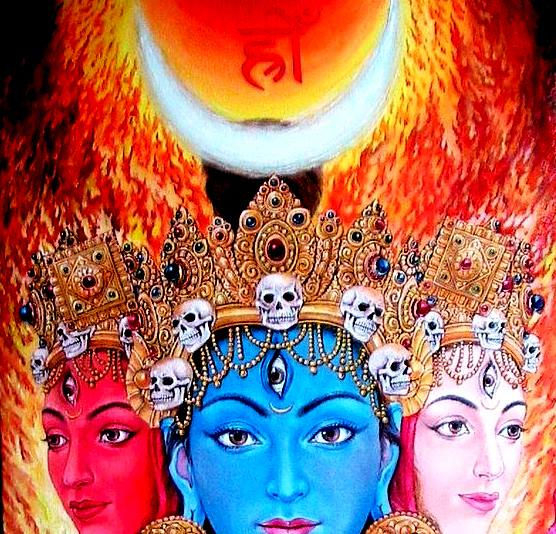


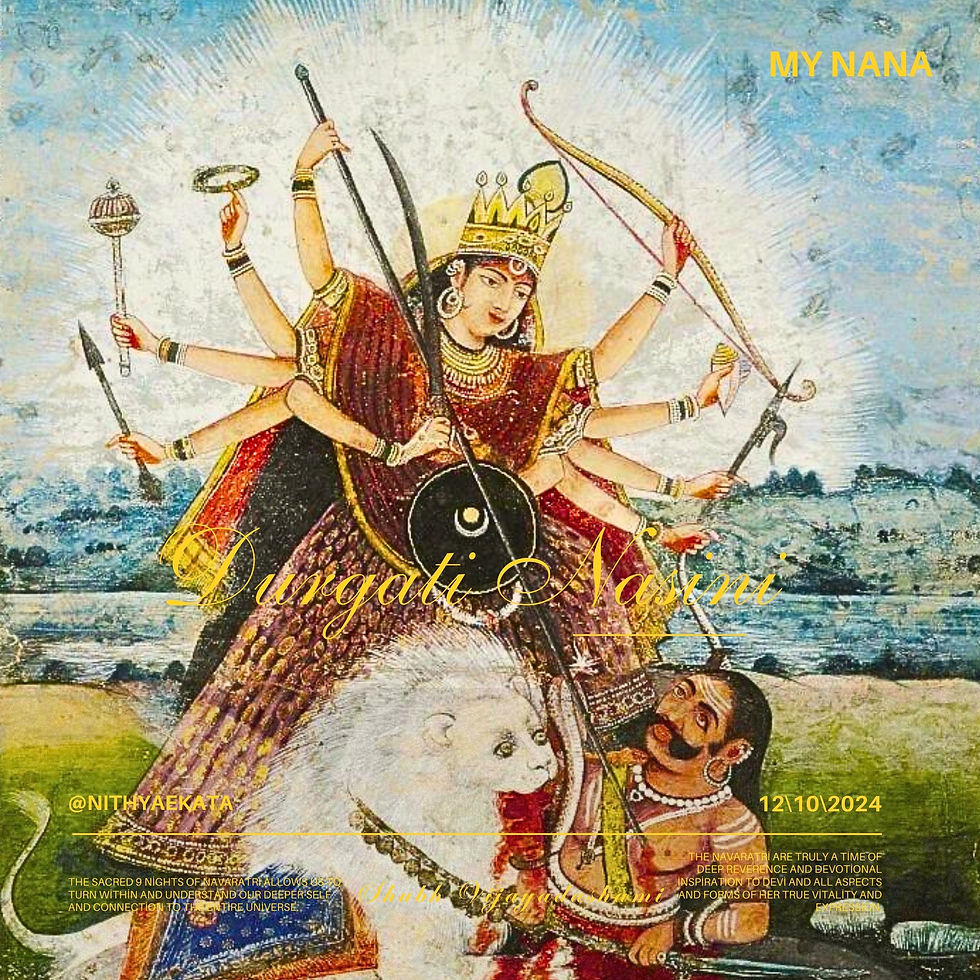

In Old Turkish State system, Kaghan (Ruler, King, Leader) was blessed by the Sun (Kün) and Moon (Ay) God to rule and establish a state. SB Moon-Sun (AY-KÜN) is common culture between the Turkic people; in Central Asia, Huns, Mamluk Kipchak Turks, Seljuk Turks. To be seen also in Pazyryk. In Turkish "AY" (Moon) is equivalent verb to "Yaratmak" (Creating) "Türetmek" (Produce). The Moon, unlike the Sun, changes in form. Born, Grow Up, Dies for 3 Days, and Reborn. The cycle of the Moon, is "The Other World" and "Rebirth" in the archaic human subconscious, and develop mythology about it. The desire of human being is eternal life, and that brought 'life is not "linear" but "cyclical"'. Nature never dies, he reborn forever, why can human being not reborn?... Anthropomorphic image in Sakha (Yakut Turks) myth of "AY TENGRI" (Moon God) is "ÜRÜNG AY TOYON"; "WHITE CREATOR GOD". Moon is the ancestor of Great Shamans. Ancestor Shamans, gives us the time of WAR, by looking in the cycle/position of the MOON. Uyghur Turks use for Khagans "AY TENGRIDE KUT BULMUŞ" Moon have found Sacred Energy in God"... (Kut= Holly, sacred energy, life force, abundance, life-giver, blessedness ; Tengri= God ; Ay=Moon ; verb.Bulmak=Find) In Turkish cosmology "Crescent" (Hilal in Turkish), likened to a "Bull Horn", and Oghuz (Oğuz Kağan) Kagan is associated with him. (photos) Türkçe olarak: Pazırık kurganı Ay-Kün - NB Türklerde Kün-Ay - NB Kün-Ay damgalı bir Taş - NB Göbeklitepe - Hun - SB. Göbeklitepe-Hakasya - SB. from the book of Emel Esin Türklerin Uzakdoğu Siyasi ve Kültür Tarihine Etkileri Effects of Turks on Political and Cultural History of the Far East


A Karaite Turkic woman. On her left breast is the most ancient iconography of the Turks, the KÜN-AY symbol.

A GokTurk coin bearing the emblem of a horse and the KUN AY moon-sun symbol.


GokTurk coins
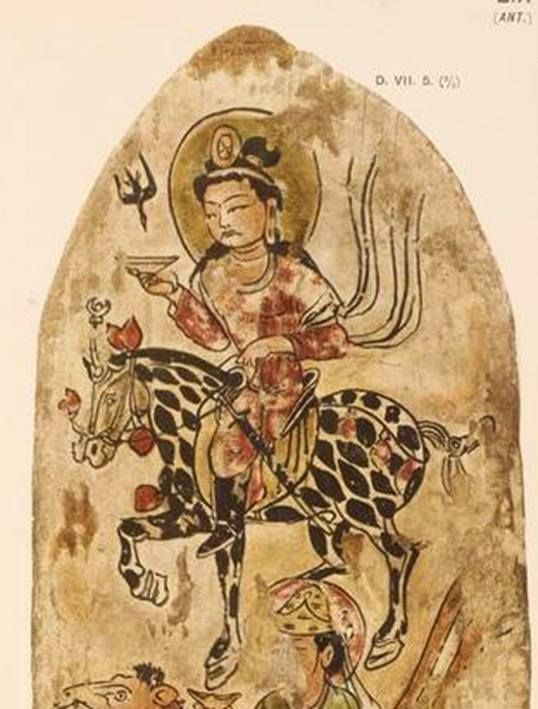
Uyghur Budhist Turk with Kun Ay symbol and a trishul !from Hotan

ISIS as serpent has KUN AY on her head..I will make a detailed post about true history of Eygptians.

Pazırık Iskıt (SYCTHİAN ) Turks
EARLY TURKS IN CHINESE ART WITH ANT CUP HOLDING IN THEIR HANDS WITH KUN AY

Early Turks: Male Costume in Chinese ArtEchoes of Power, Identity, and Presence (6th–8th Century)
Across the silent surfaces of stone, clay, and burial relics, the Early Turks emerge—not as distant figures of history, but as vividly embodied presences. In the art of early medieval China, they appear as “the Other,” yet paradoxically, these depictions offer some of the most faithful visual testimonies of their world.
Two distinct visual traditions carry their image across time. The earliest—rooted in the second half of the 6th century, during the First Turkic Kaghanate—are carved into the funerary beds and sarcophagi of Sogdian communities in China. These are not mere decorative scenes; they are cultural crossings, where steppe nobility is preserved in the language of another civilization. Later, during the Early Tang period (7th to early 8th century), the Turks reappear in terracotta—figures shaped in earth, yet charged with movement, hierarchy, and identity.
What is striking is their authenticity. These figures are not absorbed into Chinese visual norms; they resist transformation. There is no true “Sinicization.” Instead, we witness garments that retain their integrity—their structure, silhouette, and rhythm of color. Subtle influences from Sogdian artisans and the oasis cultures of Kucha and Khotan whisper through the details, but the essence remains unmistakably Turkic.
In the earlier depictions, a world of layered symbolism unfolds. Black woolen belts, wrapped twice around the waist, dominate the composition—silent markers of status and identity. Red trousers burn with presence. Each element feels deliberate, encoded. These are not just clothes; they are declarations.
By contrast, the later Tang-era figures reveal a transformation. The kaftan evolves, its lapels forming sharp triangular lines, simplifying yet sharpening the visual language. Garments elongate or contract dramatically, suggesting shifting aesthetics or functions. Color hierarchies emerge more clearly: white garments signal elevated status, especially when paired with figures clad in red. Even in stillness, these figures communicate rank, power, and relational order.
The duality of Turkic life is also preserved in clay: nobles appear both in ceremonial attire and as mounted figures—hunters, warriors, beings in motion. Their clothing adapts to context, reflecting a life defined by both ritual and action. The mechanics of dress—whether fastening, overlapping, or thrown over the body—hint at deeper behavioral codes, shaped by environment and activity.
Behind these visual records lies a historical paradox. The Early Turks commanded vast territories, forged powerful military traditions, and influenced neighboring cultures profoundly—yet tangible remains of their clothing are scarce. Fragments survive in modest burials from the late 7th century, offering only partial glimpses. Written records are even more elusive, and early epic traditions remain silent on the materiality of dress.
This absence elevates the importance of these artistic depictions. They become not just representations, but repositories of knowledge.
For centuries, scholars have turned to carved stone statues scattered across the Eurasian steppe—solemn figures standing guard over burial mounds and sanctuaries. These sculptures, often depicting elite male warriors, present a standardized, almost archetypal image. Yet they are incomplete. Details of clothing are fragmentary, proportions distorted, surfaces worn by time.
And still, traces of a richer reality persist. It is likely these statues were once painted—alive with color now lost to history. Belts, plaques, and ornaments may have been highlighted in pigment, their meanings intensified. Perhaps some statues were even adorned with real garments, braided hair, or ritual objects, blurring the boundary between representation and embodiment.
Even today, echoes of this ancient relationship endure. In certain ritual practices, these statues are reactivated—painted, dressed, and engaged with as living presences. The past does not remain still; it is reawakened.
Through these layered images—stone, clay, pigment, and memory—the costume of the Early Turks transcends its material form. It becomes a language of identity, a system of symbols, and ultimately, a bridge between worlds: nomadic and settled, Turkic and Chinese, past and present.

Reception of the noble Turk in An Qie’s residence. Detail (the upper row of figures) (Anjia [An Qie] Tomb 2003, p. 170).
Across stone, clay, and silence, the Early Turks appear—unassimilated, unmistakable.
From 6th–8th century Chinese art, their presence survives in two forms: carved into Sogdian funerary beds and shaped in Tang terracotta. Not as myth, but as memory. Not as “others,” but as sovereign beings.
Their clothing speaks.
Black wool belts wrapped twice at the waist—symbols of authority.Red garments—vital, grounded, alive.Later, sharp triangular kaftans, shifting silhouettes, and a clear code of color: white for rank, red for relation.
No true Sinicization. Only subtle echoes of Sogdian and oasis cultures. The essence remains Turkic—precise, intentional, encoded.
Warrior. Hunter. Noble.Ceremony and motion held in the same body.
In a world where actual garments have nearly vanished, these images become archives. Every fold, fastening, and layer carries meaning.
The Early Turks did not just wear clothing—they wore identity, power, and cosmology.
And through art, it still speaks.
AS YOU MIGHT HAVE UNDERSTOOD Information about Turkic history is rare on the Internet. Articles on Wikipedia are inconsistent, literally anyone can edit there. Right now, I am working on an encyclopedia and documentary of my own, complete with sources about TRUE HISTORY.
KUN AY SYMBOL IS THE ROOT .- Nitya Ekata


Comments